
Research is becoming one of the most exciting and impactful career paths for students across India. With rapid advancements in artificial intelligence, language technologies, healthcare, social sciences, sustainability, and global development, international research opportunities are opening new doors for students who want to build meaningful careers beyond conventional jobs.
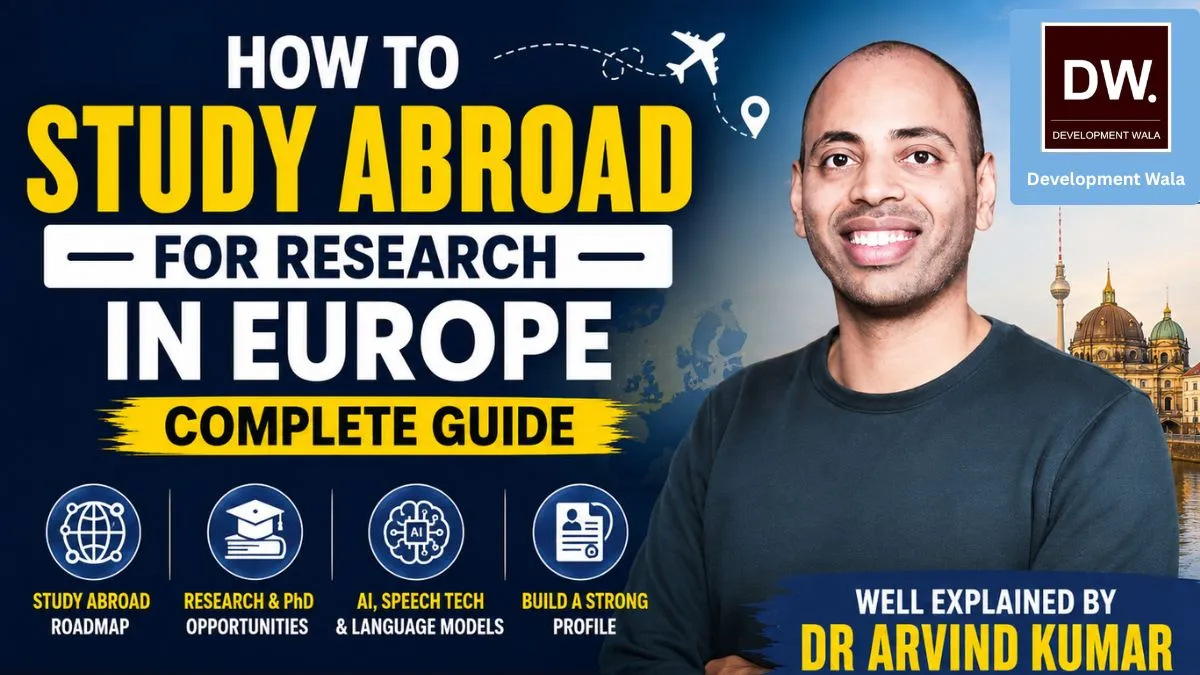
In a recent online mentorship session hosted by Development Wala, Dr. Arvind Kumar shared his inspiring journey from Jharkhand, India to the prestigious Max Planck Institute for Psycholinguistics in Europe. During the session, he explained how students from different academic backgrounds can prepare for global research careers, fully funded PhD programs, postdoctoral opportunities, and international fellowships.
This detailed guide summarizes the key insights from the session and provides practical information for students who want to pursue research opportunities abroad.
Why Research Abroad is Becoming Popular Among Indian Students
Many students today are exploring alternatives beyond traditional corporate careers. Research abroad offers students access to advanced laboratories, interdisciplinary collaboration, global mentorship, and fully funded academic opportunities.
According to Dr. Arvind Kumar, one of the biggest advantages of pursuing research outside India is exposure to cutting edge projects that directly impact society. International universities and research labs invest heavily in innovation, technology, and social problem solving.
Students pursuing research abroad often gain:
• Access to world class infrastructure
• Exposure to international research culture
• Better funding opportunities
• Opportunities to collaborate globally
• Strong academic and professional networks
• Better prospects for academic careers
• International work experience
For students aiming to become professors, scientists, policy researchers, social science experts, or AI researchers, international exposure can significantly strengthen their academic profile.
Dr. Arvind Kumar’s Journey from India to Europe
Dr. Arvind Kumar’s journey is an inspiring example for students from non elite institutions who dream of building global careers in research.
Born and raised in Bokaro, Jharkhand, he completed his engineering from Pune before initially joining the IT sector. However, he later realized his passion lay in research rather than corporate technology jobs.
He pursued his Master’s degree at BIT Mesra and eventually completed his PhD in Speech and Music Processing from the same institution.
After gaining teaching experience at universities in Bengaluru, he started applying for international postdoctoral opportunities. Following several rejections and nearly seven months of continuous applications, he finally secured a postdoctoral research position at the Max Planck Institute for Psycholinguistics in Europe.
His story highlights one important lesson:
Consistency matters more than pedigree.
Students from non IIT and non elite institutions can also succeed internationally through persistence, strong research skills, and continuous learning.
Understanding Global Research Career Pathways
Many students remain confused about how research careers actually progress. Research careers generally follow a structured academic pathway.
Undergraduate Degree
Students first complete a Bachelor’s degree in their chosen field such as engineering, social sciences, humanities, psychology, education, economics, or life sciences.
Master’s Degree
A Master’s degree helps students gain specialization and research exposure. Many students begin working on research projects during this stage.
PhD Programs Abroad
A PhD is the stage where students become independent researchers. In most European countries, PhD positions are fully funded and students receive a monthly salary.
Postdoctoral Research
After completing a PhD, researchers often pursue postdoctoral positions to deepen expertise and expand their research portfolio.
Academic or Industry Careers
Researchers may later become:
• Professors
• Scientists
• Policy Researchers
• AI Researchers
• Research Consultants
• Industry R&D Specialists
• Startup Founders
Key Information About Research Opportunities Abroad
| Category | Details |
|---|---|
| Popular Destinations | USA, Germany, Netherlands, UK, Switzerland, Japan, Singapore |
| Funding Availability | Mostly fully funded for PhD and Postdoc |
| Average PhD Stipend in Europe | €2500 to €4000 per month |
| Main Requirements | Strong academic profile, SOP, recommendation letters |
| Important Skills | Research aptitude, consistency, curiosity |
| Popular Scholarships | Erasmus Mundus, Fulbright, Commonwealth, Marie Curie |
| Best Platforms to Search | LinkedIn, university websites, research portals |
| Ideal Preparation Timeline | 1 year before applications |
Top Countries for Research Opportunities Abroad
Several countries are investing heavily in research and innovation. These nations offer excellent opportunities for international students.
Germany
Germany is among the most preferred destinations for Indian students pursuing research. Public universities often have minimal tuition fees, and PhD researchers usually receive salaries through funded projects.
Popular areas include:
• Artificial Intelligence
• Robotics
• Engineering
• Social Sciences
• Sustainability Research
• Language Technologies
Netherlands
The Netherlands has become increasingly popular for international research careers. Institutions such as the Max Planck Institute collaborate with researchers globally.
The country offers excellent interdisciplinary research culture and international work environments.
United Kingdom
The UK continues to attract researchers in social sciences, humanities, AI, public policy, education, and development studies.
Scholarships such as the Commonwealth Scholarship and UKRI funding are highly popular among Indian students.
United States
The USA remains a global leader in research funding and innovation. American universities provide advanced infrastructure and strong research ecosystems.
However, competition and tuition costs can be high for Master’s programs.
Switzerland
Switzerland offers some of the highest quality research environments globally with excellent return on investment.
Japan and Singapore
Asian countries like Japan and Singapore are emerging as strong research hubs with world class labs and growing opportunities for international scholars.
Types of Research Opportunities Abroad
Students often assume research only means PhD programs. In reality, there are several types of research opportunities available.
Research Assistantships
Students can join research projects as assistants. These positions are often paid and help students gain research experience before applying for PhD programs.
Fully Funded PhD Programs
These are the most common international research opportunities. Students receive funding through universities, government grants, or research projects.
Postdoctoral Fellowships
Postdoctoral researchers work on advanced projects after completing their PhD.
Research Internships
Short term research internships are ideal for undergraduate and Master’s students.
Industry Research and Development Roles
Companies like Samsung, Amazon, and major AI firms recruit PhD graduates for research and development roles.
Eligibility Criteria for Research Opportunities Abroad
Requirements vary by university and country, but some common eligibility criteria include:
Academic Scores
Most universities prefer good academic performance, though there is often no strict percentage cutoff.
Dr. Arvind Kumar himself mentioned that he had modest academic scores but succeeded through consistent effort and research experience.
Research Experience
Students with research projects, internships, or publications often receive an advantage.
Statement of Purpose
A strong Statement of Purpose explains your motivation, research interests, and long term goals.
Letters of Recommendation
Recommendation letters from professors or research supervisors are extremely important.
Research Proposal
Some PhD applications require students to submit research proposals.
English Language Proficiency
Tests like IELTS or TOEFL may be required for many international programs.
Importance of Research Publications
One of the major points discussed during the session was the importance of publishing research papers.
Students who publish papers demonstrate:
• Research ability
• Academic writing skills
• Understanding of research methodology
• Original contribution to knowledge
Dr. Kumar suggested that beginners should first target conferences before aiming for high impact journals.
Platforms like Springer and Wiley offer journal finder tools that help students identify suitable journals for publication.
Best Scholarships and Fellowships for Research Abroad
Several fully funded scholarships support Indian students pursuing international research careers.
Erasmus Mundus Scholarship
Erasmus Mundus is one of the most prestigious European scholarships covering tuition, travel, and living expenses.
Fulbright Scholarship
Fulbright Program supports students pursuing higher education and research in the USA.
Commonwealth Scholarship
Commonwealth Scholarship Commission funds students from Commonwealth countries to study in the UK.
Marie Curie Fellowship
Marie Skłodowska Curie Actions offers prestigious funding for PhD and postdoctoral researchers across Europe.
How to Build a Strong Research Profile
Building a strong profile takes time and consistency.
Work on Projects
Students should actively participate in academic or practical projects related to their field.
Learn Relevant Tools
Technical students should learn programming, AI tools, data analysis, or domain specific technologies.
Social science students should develop research methodology, writing, and analytical skills.
Network with Professors
Students should reach out to professors whose research aligns with their interests.
Start Small
Students should begin with small conferences or local research opportunities before targeting international journals.
Stay Consistent
Consistency is often more important than exceptional talent.
How to Find Research Opportunities Abroad
Dr. Kumar highlighted LinkedIn as one of the best platforms to search for international research positions.
Useful platforms include:
• University websites
• Research lab websites
• Academic mailing lists
• Development Wala opportunity portal
Students should create job alerts and regularly track openings.
Challenges Students Face Abroad
Research careers abroad are rewarding, but they also come with challenges.
Cultural Adjustment
Adapting to a new country and culture can initially feel overwhelming.
Loneliness
Many international students experience loneliness during their initial months abroad.
Academic Pressure
Working in highly competitive environments can create mental pressure.
Rejections
Research applications often involve multiple rejections before success.
Dr. Kumar emphasized that students should focus on continuous applications without becoming emotionally attached to outcomes.
Research Opportunities for Social Science and Humanities Students
A major highlight of the session was the reassurance that research opportunities are not limited to technical students.
Students from:
• Social Work
• Education
• Political Science
• Psychology
• Fine Arts
• Sociology
• Humanities
can also pursue funded research opportunities abroad.
European universities especially value interdisciplinary and humanities research.
Action Plan for Students Interested in Research Abroad
First Year Students
Focus on academics and explore your interests.
Final Year Students
Start preparing for applications and identify research areas.
Master’s Students
Work on projects and publications.
PhD Aspirants
Prepare research proposals and connect with supervisors.
Working Professionals
Leverage professional experience to identify research questions and practical problems.
Key Lessons from Dr. Arvind Kumar’s Session
The session delivered several valuable lessons for students:
• Research careers are accessible to students from all backgrounds
• International opportunities require patience and persistence
• Publications strengthen applications
• Networking with professors is essential
• Consistency beats talent
• Students should start preparing early
• Social sciences and humanities also have global opportunities
• Research can directly contribute to societal development
How Development Wala Supports Students
Development Wala regularly organizes mentorship sessions, career guidance webinars, and international opportunity discussions for students and young professionals.
Students interested in global education opportunities can explore:
• Scholarships
• Fellowships
• PhD programs
• Study abroad guidance
• Career mentorship
• Research opportunities
The platform also runs the Higher Education Mentorship Program to support students preparing for international academic careers.
Conclusion
Research abroad is no longer limited to students from elite institutions or privileged backgrounds. With growing access to scholarships, digital learning resources, international mentorship, and global collaboration, students from across India can now build meaningful careers in international research.
Dr. Arvind Kumar’s journey from Jharkhand to the Max Planck Institute demonstrates that persistence, curiosity, and consistency can open global doors.
Whether you are a student in engineering, social sciences, humanities, AI, education, or development studies, international research opportunities are expanding rapidly.
Start early, build your profile steadily, remain consistent, and continue exploring opportunities that align with your passion and long term goals.
To explore more scholarships, fellowships, research opportunities, and global education resources, visit Development Wala.
Whether you’re targeting India’s top institutions or global universities, we have a structured mentorship path for you.
Apply for mentorship1:1 Expert Consultation : https://developmentwala.com/social-sector-career-mentorship/
Discover more from Development Wala
Subscribe to get the latest posts sent to your email.